2026-08-17 · Kalei Akina
Biohazard Cleanup in Hawaii: Complete Guide to Trauma, Death & Crime Scene Cleanup
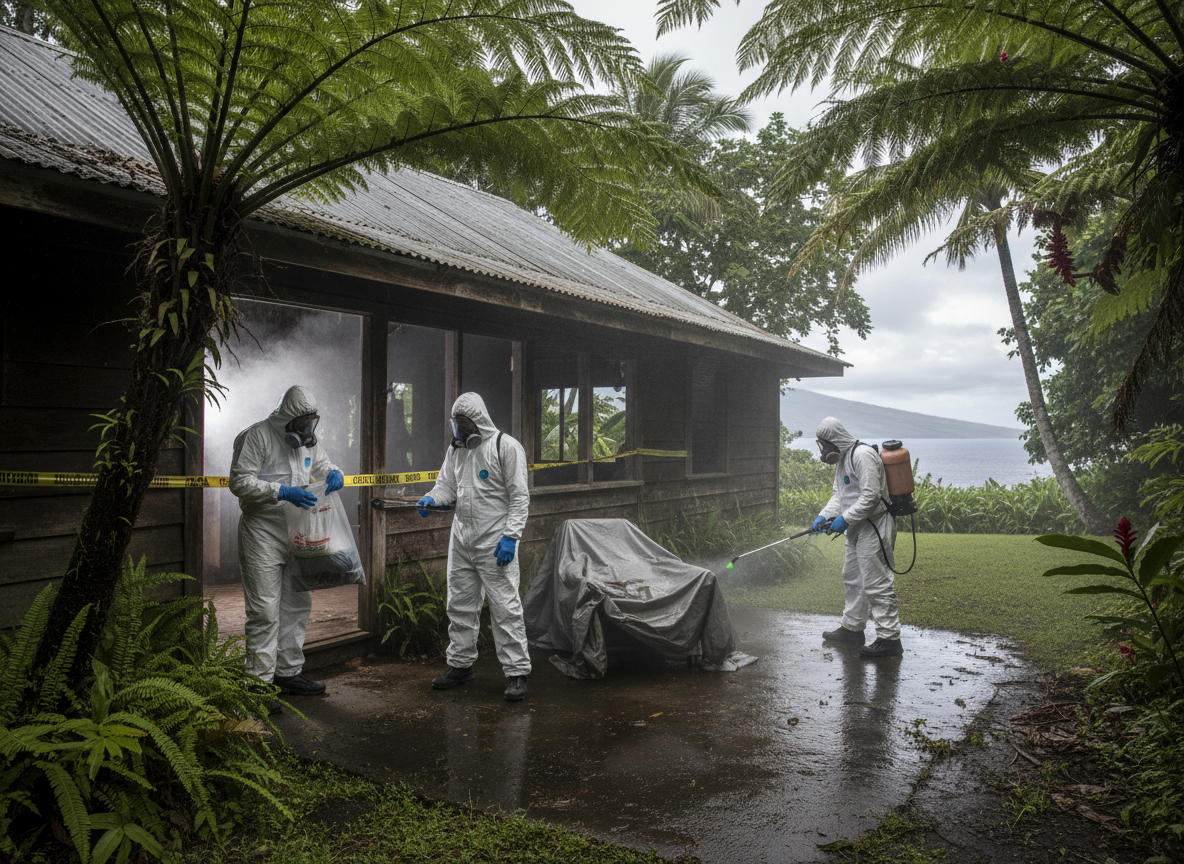
Biohazard cleanup for trauma, death, and crime scenes in Hawaii typically takes 4–24 hours for standard residential jobs and 2–5 days for larger or more complex scenes, depending on the extent of contamination and the need for odor treatment. In Hilo, crews work around the tropical rainforest climate where frequent rain and mild temperatures accelerate bacterial growth and complicate drying. The process starts with a full hazard assessment, followed by removal of affected materials, disinfection using EPA-registered agents, and verification testing before any restoration begins.
Initial Assessment and Containment
Every biohazard scene begins with a detailed walkthrough to identify all affected surfaces and hidden contamination. Technicians map the spread of blood, bodily fluids, or other materials while wearing full PPE including respirators, Tyvek suits, and double gloves. In neighborhoods such as Downtown Hilo or Waiakea, older homes often have porous flooring and tight spaces that require extra containment barriers to prevent cross-contamination. Crews establish negative air pressure and seal off HVAC systems immediately. This step also includes documenting the scene for insurance and legal records. The assessment determines whether specialized equipment like ozone generators or hydroxyl machines will be needed later for odor neutralization. Local conditions near Hilo Bay can introduce additional moisture, so moisture meters are used on walls and subfloors right away.
Trauma and Death Scene Protocols
Trauma and death scenes require strict adherence to OSHA bloodborne pathogen standards and Hawaii County health guidelines. After containment, all visible fluids and tissue are removed using absorbents and manual extraction tools. Affected carpet, drywall, and insulation are cut out in sections and double-bagged for disposal at approved facilities. Trauma scene cleanup follows the same sequence but often involves additional focus on projectile patterns or impact areas. In Puueo or near Liliuokalani Gardens, where homes sit close together, crews pay extra attention to shared walls to avoid affecting neighbors. Disinfection uses a hospital-grade quaternary ammonium solution applied in multiple passes, followed by ATP testing to confirm surface cleanliness. Any remaining odors are addressed with targeted air scrubbing rather than masking agents.
Crime Scene Cleanup Considerations
Crime scene cleanup adds layers of coordination with law enforcement and evidence preservation requirements. Technicians wait for clearance from Hawaii County authorities before beginning work and document every item removed. Crime scene cleanup frequently overlaps with biohazard cleanup when blood or other fluids are present. In areas around Rainbow Falls or Hilo Bay, outdoor scenes may involve soil remediation if fluids have soaked into the ground. All waste is tracked with manifests and transported to licensed disposal sites. The process also includes removing and replacing items like mattresses or furniture that cannot be salvaged. Families are often referred to resources on scene responsibility through related articles such as Crime Scene Cleanup in Hawaii: Who Is Responsible for Cleaning the Scene?.
Odor Treatment and Final Verification
Persistent odors from decomposition or bodily fluids are common in Hawaii’s humid climate and require more than surface cleaning. Technicians use air movers and dehumidifiers to reduce moisture levels below 50 percent before applying odor-neutralizing agents. In some cases, removal of subflooring or wall cavities is necessary when fluids have wicked into wood framing. Final verification includes both visual inspection and laboratory swab testing for pathogens. Odor treatment & cleanup is scheduled as a separate phase when initial disinfection alone does not resolve the issue. Homes in Waiakea or near Rainbow Falls may need additional ventilation strategies due to consistent rainfall keeping ambient humidity high.
Practical Next Steps for Hawaii Residents
Property owners facing these situations should contact a local crew familiar with Hawaii County regulations and the island’s frequent rain patterns. How Much Does Biohazard Cleanup Cost in Hawaii? 2026 Pricing Guide provides current ranges for common job types. Technicians can usually provide an on-site estimate after the initial assessment. Work is available Monday through Saturday 8am–6pm with 24x7 emergency response for urgent cases. The team operates from 421 Kalanikoa St, Hilo, HI 96720 under license HI-BIO-2026-XXXXX.